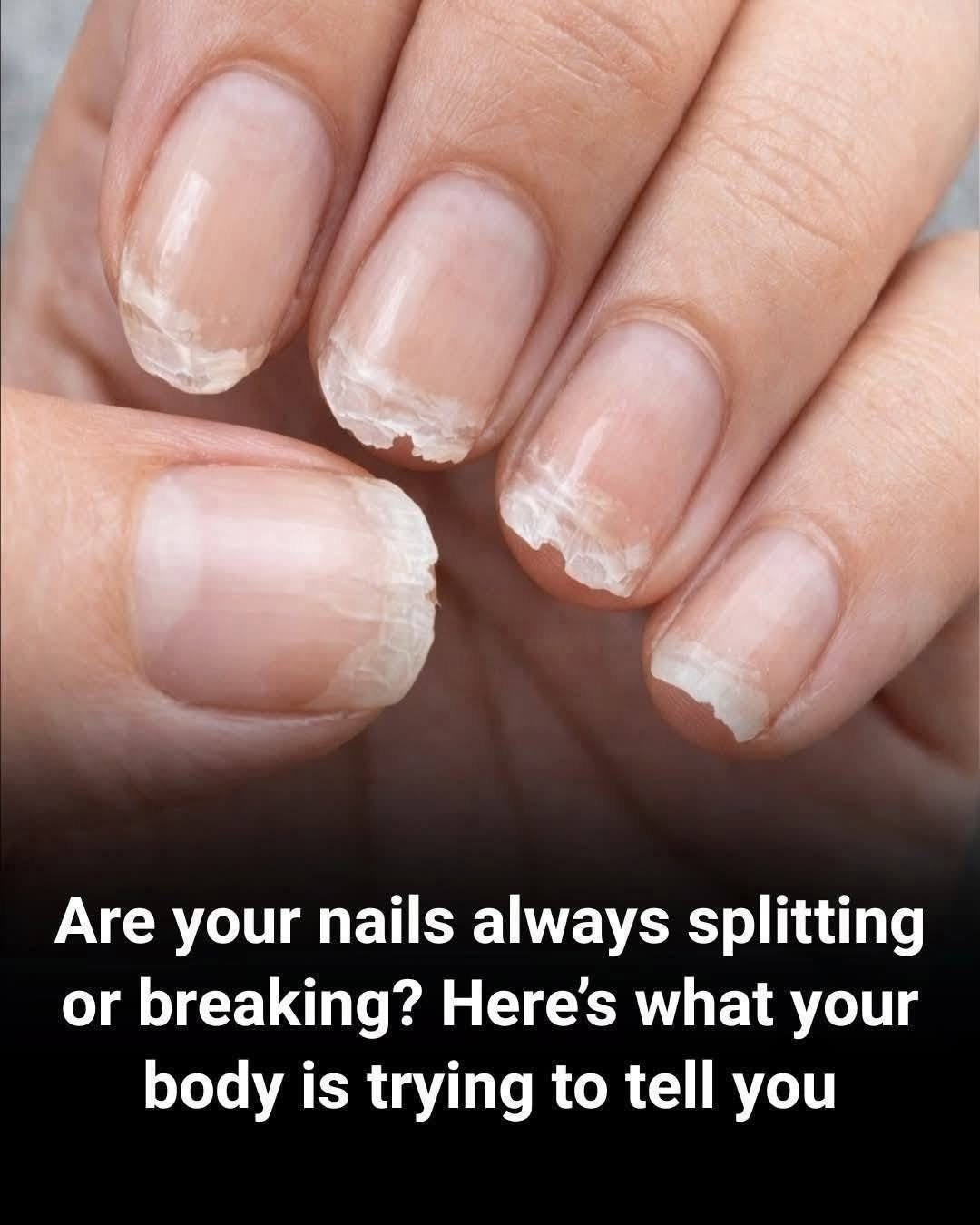
Brittle or Fragile Nails: What Your Body May Be Trying to Tell You
Have you ever looked down at your hands and noticed that your nails keep splitting, peeling, cracking, or breaking—even when you aren’t doing anything unusual?
You might be tempted to blame it on getting older, using nail polish, or simply having “bad nails.”
But persistent brittle nails can sometimes be a clue that something is affecting your nails or your overall health.
And the surprising part is that the most common causes aren’t always what people think.
One of the biggest culprits is something incredibly simple:
Too much water.
Repeatedly soaking your hands and then allowing them to dry can weaken the nail structure over time. Washing dishes, cleaning, frequent handwashing, and exposure to household chemicals can all contribute to peeling and splitting.
Another possibility is repeated exposure to nail products or treatments.
Frequent manicures, gel polish, acrylics, acetone-based removers, and aggressive filing can leave nails thinner and more fragile—especially when the surface is repeatedly buffed or peeled.
But there can be another side to the story.
If your nails have become unusually fragile without an obvious explanation, nutritional problems may sometimes play a role.
Low levels of certain nutrients, including iron, can be associated with changes in the nails. However, brittle nails alone don’t prove that you have a deficiency.
That’s important.
You shouldn’t look at a cracked nail and immediately assume, “I must be lacking vitamins.”
There are many possible explanations.
Your nails can also become weaker because of aging. As we get older, nails often grow more slowly and can become drier and more prone to splitting.
Certain medical conditions can also affect nail appearance.
For example, thyroid disorders, psoriasis, eczema, fungal infections, and other conditions can sometimes cause changes in nail texture, thickness, color, or growth.
That’s why the pattern matters.
If your nails have always been a little fragile, it may simply be your natural nail structure.
But if they suddenly become dramatically different, repeatedly split, develop unusual grooves or discoloration, or change along with other symptoms, it’s worth talking with a healthcare professional.
And here’s one thing you can start doing today:
Protect your nails instead of constantly trying to strengthen them with more products.
Wear gloves when cleaning or washing dishes.
Keep your nails at a manageable length.
Moisturize your hands and nails regularly, especially after washing.
Avoid picking or peeling damaged layers.
Give your nails a break from aggressive manicures if they’re already weak.
And don’t automatically start taking high-dose supplements just because your nails are breaking.
Sometimes the answer isn’t another bottle of vitamins.
Sometimes it’s simply protecting your nails from repeated damage.
Your nails aren’t a perfect “health detector,” but changes in them are worth paying attention to.
So the next time one splits, don’t panic.
Instead, ask yourself:
Have I been exposing my hands to more water or chemicals lately?
Have I been using gel, acrylics, or strong nail removers?
Did this change suddenly?
Are there other changes happening in my body?
Those questions can tell you much more than the broken nail itself.
And if the changes persist or look unusual, let a healthcare professional take a closer look.
Because sometimes your nails aren’t asking for another manicure.
They’re asking you to pay attention.
#BrittleNails #NailHealth #HealthyNails #WomensHealth #HealthTips #WellnessTips #NailCare #HealthyLiving #BodySigns #DidYouKnow