PART 2 — The “Deadliest Food” Isn’t Dangerous Because It Looks Poisonous
When people hear that a food can be responsible for hundreds of deaths, they often imagine something obviously toxic.
But this food doesn’t look dangerous at all.
In fact, hundreds of millions of people eat it regularly.
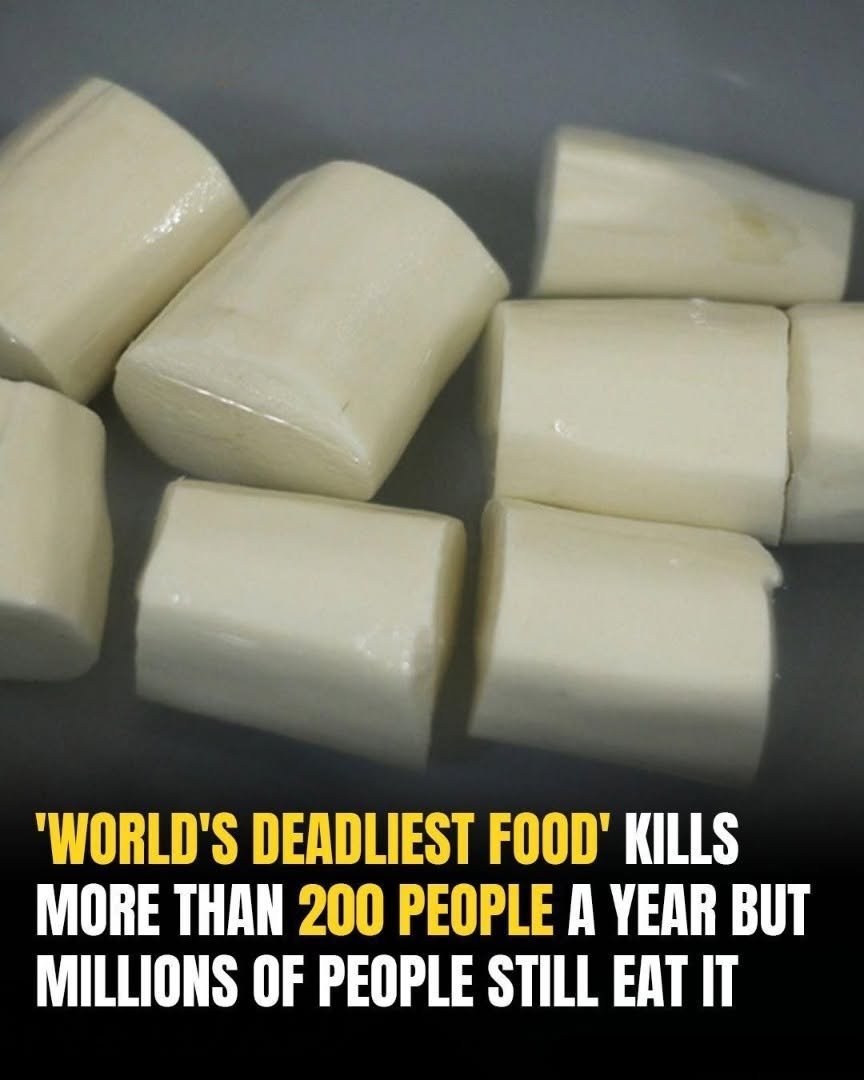
The food is cassava, a starchy root that is a major source of calories in many parts of Africa, Asia, and Latin America.
So why has it earned such a frightening reputation?
The answer is a naturally occurring substance called cyanogenic glycosides.
When certain varieties of cassava are improperly processed, these compounds can release cyanide.
And cyanide is extremely dangerous.
But here’s the part that is often missing from viral headlines:
Cassava can be safely eaten when the appropriate varieties are properly processed and prepared.
Traditional preparation methods can include peeling, soaking, fermenting, drying, and thorough cooking. These processes help reduce the compounds responsible for cyanide exposure.
Problems are more likely when bitter or high-cyanide varieties are prepared incorrectly, particularly when people lack access to proper processing methods or when food shortages force communities to rely on inadequate preparation.
The symptoms of serious cyanide poisoning can include headache, dizziness, vomiting, confusion, breathing difficulties, and loss of consciousness.
That’s why food safety experts take improperly processed cassava seriously.
But calling cassava simply “the world’s deadliest food” can be misleading.
For millions of people, properly prepared cassava is an important staple.
It can be made into flour, porridge, chips, breads, and many traditional dishes.
The real danger isn’t that cassava is inherently poisonous.
It’s that the wrong variety, processed the wrong way, can become dangerous.
And that’s what makes this story so fascinating.
A food that looks completely ordinary can contain naturally occurring compounds that require knowledge and careful preparation.
It also teaches an important lesson about traditional cooking.
Many old food-preparation methods weren’t just about taste.
Sometimes, generations of experience taught people exactly how to make certain foods safer to eat.
And cassava isn’t the only everyday food with a hidden danger.
There is another food sitting in millions of kitchens that can become surprisingly dangerous when prepared or stored incorrectly.
Most people eat it without giving it a second thought.
#FoodFacts #Cassava #FoodSafety #DidYouKnow #AmazingFacts #HealthAwareness #HiddenDangers #WorldFood #NutritionFacts #TraditionalFoods #ViralFacts #FacebookStories