For fifteen years, everyone in our town called Daniel Brooks a good man.
Not a perfect man.
A good one.
There is a difference.
Daniel was the kind of person who showed up before people asked. If someone’s car broke down, he was there with jumper cables. If an elderly neighbor’s roof leaked, he climbed up with a toolbox before the rain finished falling. If a family had no groceries, a bag of food appeared on their porch, and somehow nobody ever saw who left it.
But everyone knew.
It was Daniel.
He did not make a show of kindness.
He did not post about it.
He did not tell stories at church about the people he helped.
He simply saw a need and moved toward it.
When Mrs. Carter lost her husband, Daniel mowed her lawn for three years without taking a dollar.
When a little boy named Ethan needed surgery, Daniel organized a fundraiser and sold his own motorcycle to cover what was missing.
When a storm flooded half the town, Daniel opened the doors of his small diner and fed people for free until the power came back.
People praised him then.
They hugged him.
They called him an angel.
They said, “Daniel, this town is lucky to have you.”
And Daniel would smile shyly and say, “I’m just doing what anyone should do.”
But the truth is, not everyone does.
Then one winter night, Daniel made a mistake.
A terrible one.
His daughter, Lily, had been sick for months.
The doctors called it rare.
Insurance called it complicated.
Bills called it impossible.
Daniel kept smiling in public, but those closest to him noticed the changes.
His hands shook when he poured coffee.
His eyes looked tired even after sleep.
He started forgetting small things.
One night, after closing the diner, he found an envelope on his desk.
Final notice.
If he did not pay by Friday, Lily’s treatment would be delayed.
Daniel sat alone in the dark diner for almost an hour, staring at that paper.
Then he did something he would regret for the rest of his life.
He took money from the charity jar on the counter.
Not all of it.
Just enough, he told himself.
Just until Monday, he promised himself.
He would put it back.
Nobody would know.
But somebody did know.
A teenager who worked weekends at the diner saw him through the window.
By morning, the whole town knew too.
Not the part about Lily.
Not the final notice.
Not the hospital bills.
Only this:
Daniel stole charity money.
That sentence spread faster than any good thing he had ever done.
By noon, people who had eaten free meals from his kitchen were calling him a thief.
By evening, people whose children he had helped were saying they always knew he was fake.
By the next day, someone had spray-painted one word on the side of his diner.
LIAR.
Daniel stood outside staring at it.
His daughter was upstairs in bed.
His wife was crying inside.
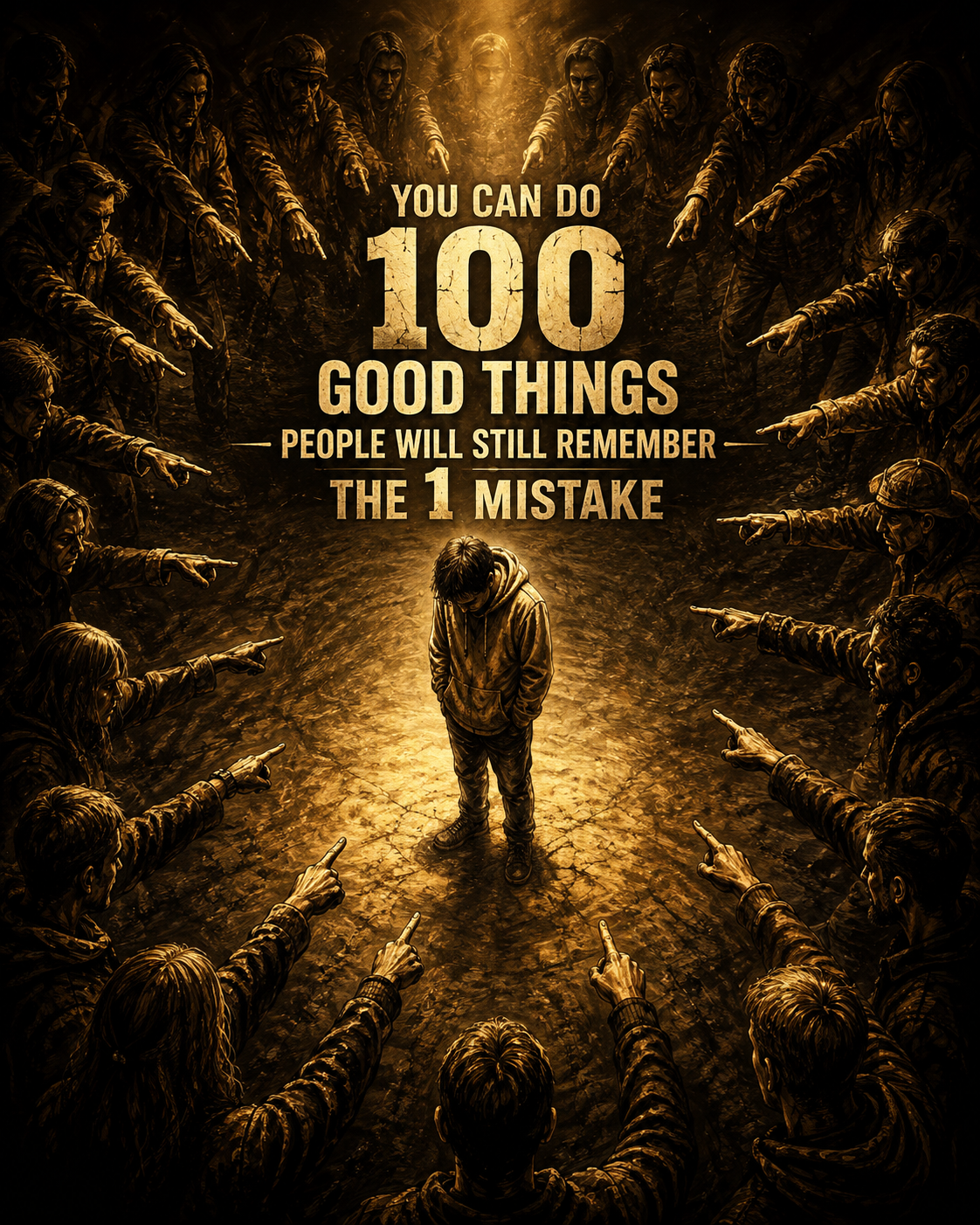
And all around him, people gathered.
Some pointed.
Some whispered.
Some recorded with their phones.
No one asked why.
No one remembered the roofs he fixed.
The lawns he mowed.
The meals he served.
The money he raised.
The nights he gave away sleep so other people could rest.
They remembered one mistake.
And they built a circle around him with it.
At first, Daniel tried to explain.
He stood in front of the town meeting with red eyes and shaking hands.
“I was wrong,” he said. “I know I was wrong. I took the money because Lily’s treatment—”
A man in the back shouted, “So sickness is an excuse for stealing?”
Daniel lowered his head.
“No.”
A woman stood up.
“My family donated to that jar.”
“I know,” Daniel whispered.
“You betrayed us.”
He nodded.
“I did.”
Another voice called out, “You made us believe you were good.”
That one hurt the most.
Daniel looked up slowly.
“I was trying to be.”
The room went quiet for half a second.
Then someone laughed.
A cruel little sound.
That was when Daniel stopped defending himself.
Because once people decide you are only your worst moment, every explanation sounds like an excuse.
The diner closed two weeks later.
Not officially.
People simply stopped coming.
The same people who once filled every booth now crossed the street to avoid looking through the windows.
Daniel sold his truck.
Then his tools.
Then the diner equipment.
Every dollar went back into the charity account.
He returned more than he had taken.
But it did not matter.
The money came back.
The trust did not.
One afternoon, Mrs. Carter, the widow whose lawn he had mowed for years, came to his door.
Daniel opened it slowly.
She held an envelope.
“For Lily,” she said.
Daniel shook his head.
“I can’t take that.”
“You took care of me when Harold died.”
His eyes filled.
“Mrs. Carter, people will talk if they see you here.”
She looked over her shoulder at the street.
Then back at him.
“Let them.”
Daniel’s chin trembled.
“I made a mistake.”
“Yes,” she said. “A big one.”
He looked down.
“But you were not born in that mistake, Daniel. And you do not have to die inside it either.”
For the first time in weeks, Daniel cried.
Not softly.
Not politely.
He broke.
Mrs. Carter stepped inside and held him like he was her own son.
The town did not forgive him quickly.
Some never did.
That is the hard truth.
Not every sad story ends with everyone clapping.
Some people kept pointing.
Some people kept whispering.
Some people loved the version of Daniel that made them feel better about judging him.
But slowly, a few others remembered.
They remembered the night he carried sandbags in a flood.
They remembered the coats he bought for children.
They remembered the funeral meals.
The hospital rides.
The quiet envelopes.
The kindness that had no audience.
And one by one, they stopped standing in the circle of accusation.
They stepped beside him instead.
A year later, Lily’s health improved.
Daniel found work at a small repair shop in the next town.
He never reopened the diner.
He said some doors close because they have to, not because you wanted them to.
But every Sunday morning, he still cooked.
Not for customers.
For anyone hungry.
He packed meals in plain brown bags and left them at the shelter before sunrise.
One volunteer finally caught him.
“Daniel,” she said, “why do you still do this? After everything people said?”
Daniel looked at the bags in his hands.
Then he smiled sadly.
“Because if I stop being kind, then my worst mistake wins.”
The volunteer did not know what to say.
So Daniel continued.
“People may remember the one thing I did wrong. I have to remember the hundred things that taught me who I really am.”
Years later, when Daniel died, the church was full.
Not packed.
But full.
Some came because they loved him.
Some came because they felt guilty.
Some came because they finally understood that a person’s life should not be measured by one broken moment alone.
Lily, now grown, stood at the front holding a folded paper.
“My father made a mistake,” she said.
No one moved.
“He never denied it. He never ran from it. He paid for it in money, in shame, in silence, and in years of trying to become better than the man he was that night.”
Her voice shook.
“But I want you to know something. When you remember his mistake, remember what came before it too. Remember that many of you ate because of him. Many of you stayed warm because of him. Many of you buried loved ones with food on the table because he quietly made sure you had it.”
People lowered their heads.
Lily looked around the room.
“We are quick to turn one mistake into a person’s whole name. But my father’s name was Daniel. Not thief. Not liar. Not failure. Daniel.”
She placed her hand on his coffin.
“And he was more than the worst thing he ever did.”
That day, Mrs. Carter left a small note beside the flowers.
It said:
You did 100 good things.
Some of us remembered.
I’m sorry it took so long.
And maybe that is the lesson.
Not that mistakes do not matter.
They do.
Some mistakes hurt people.
Some mistakes break trust.
Some mistakes must be answered for.
But a human life is bigger than one moment.
We should hold people accountable.
But we should be careful before we erase every good thing they ever were.
Because one day, we may be the person standing in the center of the circle.
Head down.
Ashamed.
Surrounded by pointing fingers.
Praying that someone remembers we are more than the mistake they saw.