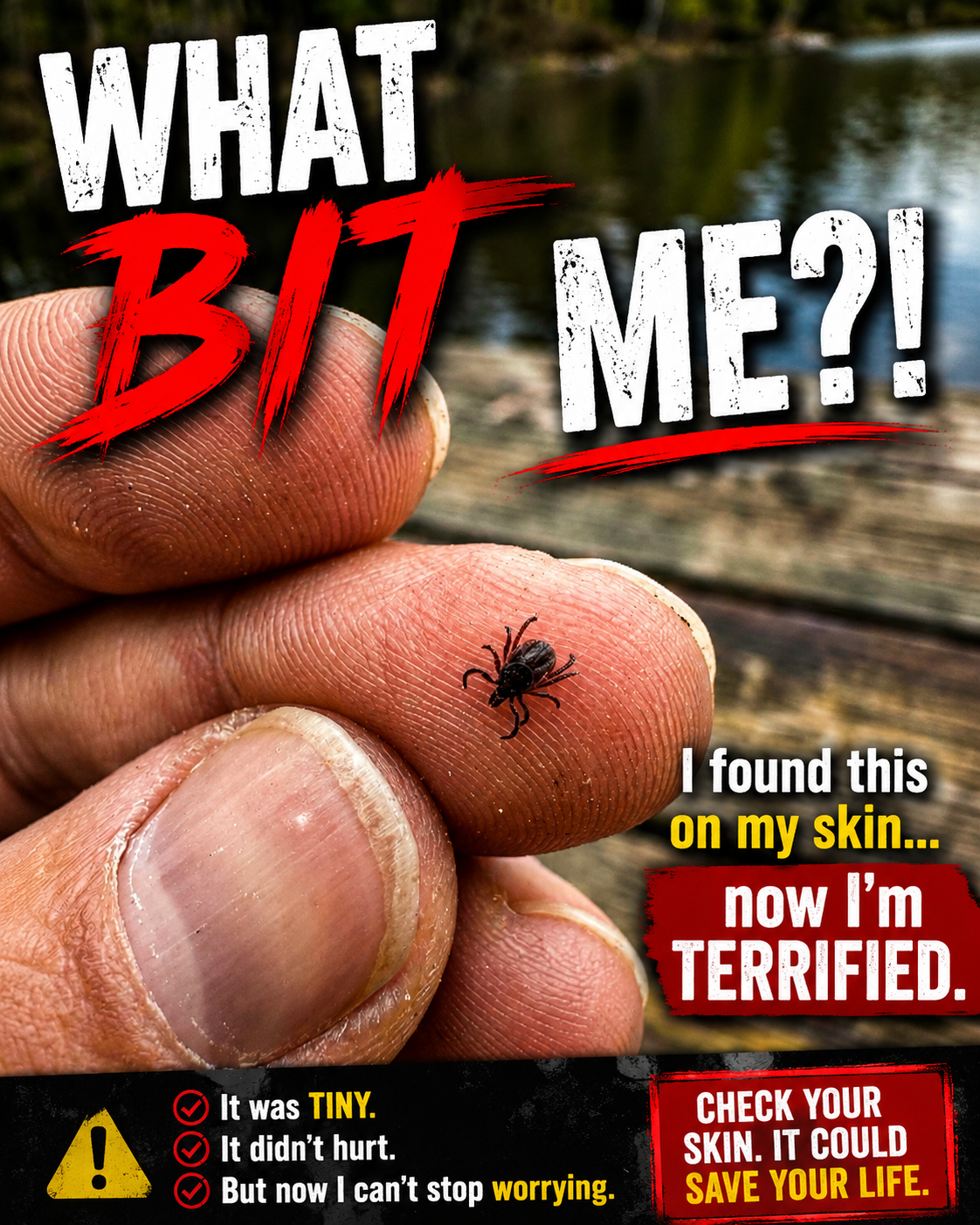
I was outside working near the water today when I felt something on my skin.
At first, I thought it was just dirt.
Maybe a tiny splinter.
Maybe a mosquito.
Maybe one of those little outdoor bugs that lands on you and disappears before you even notice.
But when I looked closer, my stomach dropped.
There was a tiny black bug on my finger.
Small enough to miss.
Big enough to scare me.
It had little legs curled out from its body, a dark rounded back, and the kind of shape that instantly makes your brain say:
That looks like a tick.
And once you think the word “tick,” your whole body starts itching.
I had been working outside for a while, walking around wood, grass, damp ground, and the edge of the water. I didn’t notice anything at first. I didn’t feel a sharp bite. I didn’t feel pain. There was no dramatic sting.
That is what made it worse.
Because ticks do not always announce themselves.
Sometimes they crawl quietly.
Sometimes they attach without you feeling much at all.
And sometimes, by the time you find them, the fear has already started.
I stared at it on my finger and thought:
How long was it on me?
Did it bite me?
Was it attached?
Should I be worried?
The first thing I did was panic.
The second thing I did was take a photo.
And honestly, I’m glad I did.
Because if you ever find something like this on your body, taking a clear photo can help later if you need to show a doctor, urgent care, or local health department.
From the photo, this looks most like a tick, not a spider, mosquito, flea, or ant. Ticks are small arachnids that can attach to people and animals and feed on blood. Some ticks can spread illnesses, but not every tick bite causes disease. Risk depends on the tick type, where you live, how long it was attached, and whether you develop symptoms afterward.
The CDC says that after a tick bite, the tick should be removed as soon as possible, and people should watch for symptoms such as rash or fever in the days to weeks afterward.
If a tick is still attached, the safest method is not to burn it, twist it, cover it with oil, or crush it with your fingers.
Use fine-tipped tweezers.
Grab the tick as close to the skin as possible.
Pull upward with steady, even pressure.
Then clean the bite area and your hands with soap and water or rubbing alcohol.
The Mayo Clinic also recommends removing ticks promptly and carefully, cleaning the bite area, and watching for symptoms after the bite.
But here is the part that matters:
I don’t know exactly how long it was attached.
It did not look huge and swollen like it had been feeding for a long time, which is somewhat reassuring. A flat-looking tick often suggests it may not have been attached long, but that is not a guarantee.
So I checked the bite area.
I looked for redness.
Swelling.
A rash.
Pain.
A dark mark.
Anything unusual.
Then I washed the area properly and saved the photo.
Because with tick bites, the next few days and weeks matter.
The CDC says to seek medical attention if you develop a rash or fever after a recent tick bite. Lyme disease symptoms can include fever, headache, fatigue, and a characteristic expanding rash, though not everyone gets the classic bullseye rash.
So here is what I would do now:
I would mark the date of the bite.
I would write down where I was when it happened.
I would keep the photo.
I would check the bite area daily.
And I would watch for symptoms like:
Fever.
Chills.
Body aches.
Headache.
Unusual tiredness.
Swollen lymph nodes.
A spreading rash.
A bullseye-looking rash.
Joint pain.
Or any redness that keeps getting bigger.
If any of those appear, I would not wait.
I would call a doctor or go to urgent care and tell them exactly when and where the bite happened.
Another important thing: some people ask if they should take antibiotics immediately after any tick bite. The CDC says antibiotics are generally not recommended after every tick bite, but in certain higher-risk situations, a healthcare provider may consider preventive treatment, especially in areas where Lyme disease is common.
That means this is not something to guess about online.
A doctor would consider the type of tick, your location, how long it may have been attached, and your health history.
The good news is:
If the tick was removed quickly and was not attached long, the risk may be lower.
The scary news is:
You still have to monitor yourself.
Because the bite itself may look small, but the symptoms can show up later.
That is why I am taking it seriously without panicking.
This tiny thing may have been on me for only a short time, but it was enough to remind me how careful we need to be outdoors.
After working outside, especially near grass, woods, water, brush, pets, or leaf piles, always check your body.
Behind the knees.
Around the waist.
Under arms.
Behind ears.
Hairline.
Ankles.
Socks.
And anywhere clothing fits tightly.
Ticks love hidden places.
And they are easy to miss.
So what bit me?
Most likely, this was a tick.
Should I be worried?
Worried enough to take it seriously.
Not worried enough to panic.
Clean the bite.
Save the photo.
Monitor symptoms.
Call a healthcare provider if a rash, fever, flu-like symptoms, worsening redness, swelling, pain, or anything unusual appears.
Because sometimes the smallest things outside can cause the biggest health questions.
And when it comes to tick bites, it is always better to be careful early than regret ignoring it later.