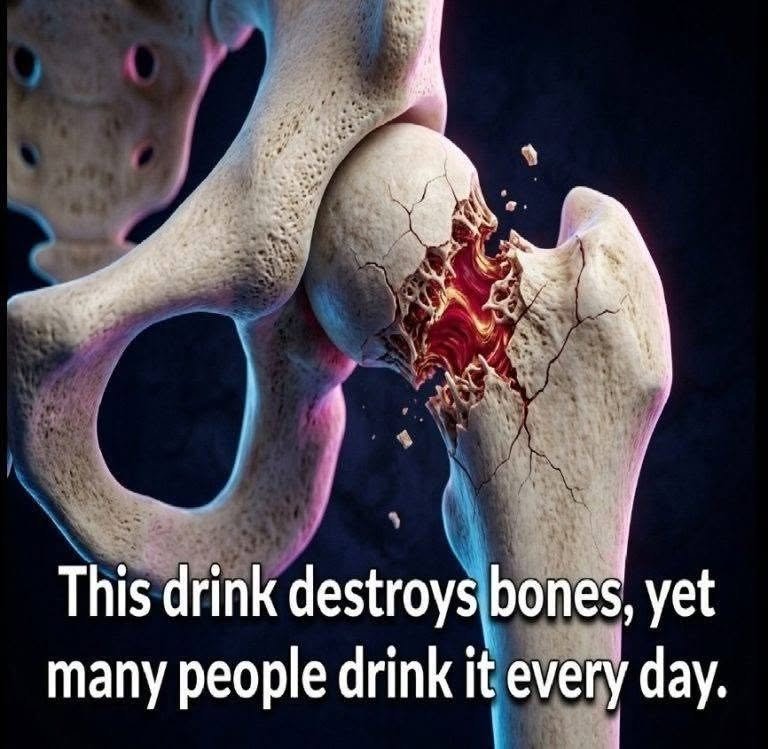
The Five Drinks That May Be Quietly Weakening Your Bones
For years, Margaret had one simple rule.
“If I’m thirsty, I’ll drink something I enjoy.”
At 68, she never thought twice about what was inside her glass.
Every morning started with a large cup of coffee.
Around noon, she would reach for a cold diet cola.
In the afternoon, especially when she felt tired, she sometimes had another caffeinated drink.
And on weekends, she enjoyed a glass of wine with dinner.
None of it seemed dangerous.
She didn’t smoke.
She walked almost every day.
She ate what she considered a fairly normal diet.
So when she slipped on the kitchen floor one morning and fractured her wrist, Margaret was shocked.
“I barely fell,” she told her doctor.
The doctor looked at her X-ray and then at her medical history.
“Your bones may have been getting weaker for years,” he explained.
Margaret couldn’t believe it.
“How? I eat healthy.”
Her doctor explained something many people don’t realize:
Bone loss can happen quietly.
Osteoporosis often has no obvious symptoms until a person suffers a fracture. Bones are living tissue, constantly being broken down and rebuilt. As we age, that balance can shift, especially when calcium, vitamin D, physical activity, hormones, medications, smoking, alcohol, or other risk factors come into play.
And then the doctor asked Margaret a surprisingly simple question:
“What do you drink every day?”
That question changed the way she looked at her beverages.
Here are five types of drinks worth paying attention to if you’re concerned about bone health.
NUMBER FIVE: EXCESSIVE COFFEE
Margaret loved coffee.
She wasn’t alone.
Millions of people start their morning with it.
And coffee itself isn’t automatically “bad for your bones.”
The concern is mainly about large amounts of caffeine, especially when caffeinated drinks begin replacing calcium-rich foods and beverages.
High caffeine intake can slightly reduce calcium absorption and increase calcium loss through urine. The Bone Health & Osteoporosis Foundation recommends moderation and notes that drinking more than about three cups of coffee daily may interfere with calcium absorption.
So if you’re drinking several large coffees every day while barely getting calcium from your diet, that’s a habit worth reconsidering.
You don’t necessarily have to give up your morning coffee.
The bigger question is:
Is coffee replacing the nutrients your bones need?
NUMBER FOUR: ENERGY DRINKS
Energy drinks can contain substantial amounts of caffeine, along with large amounts of added sugar in some varieties.
The problem isn’t that one can suddenly “melts” your bones.
That’s not how bone health works.
The concern is the overall pattern.
If someone regularly consumes highly caffeinated or sugary drinks instead of water, milk, or calcium-fortified beverages, their overall diet may become less supportive of bone health.
And when excessive caffeine consumption is combined with poor nutrition, inactivity, smoking, or heavy alcohol use, the bigger picture becomes more concerning.
Your bones don’t live in isolation.
They depend on the rest of your lifestyle.
NUMBER THREE: SUGARY SOFT DRINKS
This is where things become especially interesting.
Not all carbonated drinks are the same.
And carbonation itself isn’t considered a cause of bone loss. In fact, the Bone Health & Osteoporosis Foundation specifically notes that carbonation does not harm bones.
The concern is more complicated.
Cola beverages often contain caffeine and phosphoric acid, and several studies have investigated associations between frequent cola consumption and lower bone mineral density.
One study from the Framingham Osteoporosis Study found an association between cola intake and lower bone mineral density in older women, although researchers have emphasized that the evidence is not simple or definitive.
Another important issue is what the soda replaces.
If someone drinks several cans of soda every day instead of milk or another calcium-rich beverage, they may simply be getting less calcium.
That matters.
Because sometimes the problem isn’t just what you’re drinking.
It’s what you’re no longer drinking or eating because of it.
NUMBER TWO: HEAVILY CONSUMED SUGARY BEVERAGES
Sweet tea.
Sugary coffee drinks.
Large bottled fruit drinks.
Sweetened sodas.
And other beverages loaded with added sugar can become a problem when consumed frequently.
Research has found associations between high intake of sugar-sweetened beverages and poorer bone-health patterns, although the exact mechanisms are still being studied. One important explanation is dietary displacement: people who consume a lot of sugary drinks may consume less milk and fewer calcium-rich foods.
So the lesson isn’t:
“Never drink anything sweet.”
The lesson is:
Don’t let sugary drinks become the main source of your daily hydration.
Water should still have a major place in your day.
And your meals should provide the nutrients your bones need.
Which brings us to number one.
NUMBER ONE: HEAVY ALCOHOL CONSUMPTION
This is the drink category where the evidence is much more concerning.
Heavy alcohol consumption is a recognized risk factor for osteoporosis and fractures.
The National Institutes of Health notes that chronic heavy drinking is a significant risk factor for osteoporosis.
Heavy alcohol use can affect bone formation, nutrition, hormones, muscle strength, and balance.
And there’s another danger people sometimes forget.
Alcohol can increase the likelihood of falling.
For an older adult with already weakened bones, a fall can turn into a broken wrist, hip, or spine.
That’s why bone-health experts recommend limiting alcohol rather than treating it as harmless.
But here’s the part Margaret’s doctor wanted her to understand.
The goal isn’t to become afraid of every beverage.
You don’t have to wake up tomorrow and throw every drink in your kitchen into the trash.
Coffee isn’t automatically destroying your bones.
Carbonation isn’t secretly eating away at your skeleton.
And one soda isn’t going to give you osteoporosis.
Bone health is about the pattern.
It’s about what you consume repeatedly over months and years.
It’s about whether you’re getting enough calcium, vitamin D and protein.
It’s about whether you’re physically active.
It’s about smoking.
It’s about alcohol.
It’s about medications and medical conditions.
And it’s about your age and other risk factors.
The National Institute on Aging recommends getting adequate calcium, vitamin D and protein, staying physically active with weight-bearing activities such as walking and strength training, avoiding smoking, and limiting alcohol.
Margaret eventually changed a few things.
She reduced her cola.
She stopped drinking multiple large coffees every day.
She drank more water.
She made sure her meals contained calcium-rich foods.
She began doing appropriate strength and balance exercises after speaking with her healthcare provider.
And most importantly, she asked her doctor whether she needed a bone-density test.
Because she finally understood something she wished she’d learned years earlier:
Strong bones aren’t something you think about only after they break.
They are something you protect long before the fracture happens.
So tonight, look at the drinks sitting in your refrigerator.
Don’t panic.
Just ask yourself one question:
“What am I drinking every day—and what is it replacing?”
Because sometimes the biggest threat to our health isn’t one dramatic decision.
It’s a small habit repeated thousands of times.
And when it comes to your bones, those little habits can add up.
Health note: This story is for general education, not a diagnosis or personal medical advice. If you’re concerned about osteoporosis, frequent fractures, or your bone health, speak with a healthcare professional about your individual risk factors and whether bone-density testing is appropriate.
#BoneHealth #OsteoporosisAwareness #HealthyAging #StrongBones #HealthyLiving #Over60Health #WellnessTips #Calcium #HealthyHabits