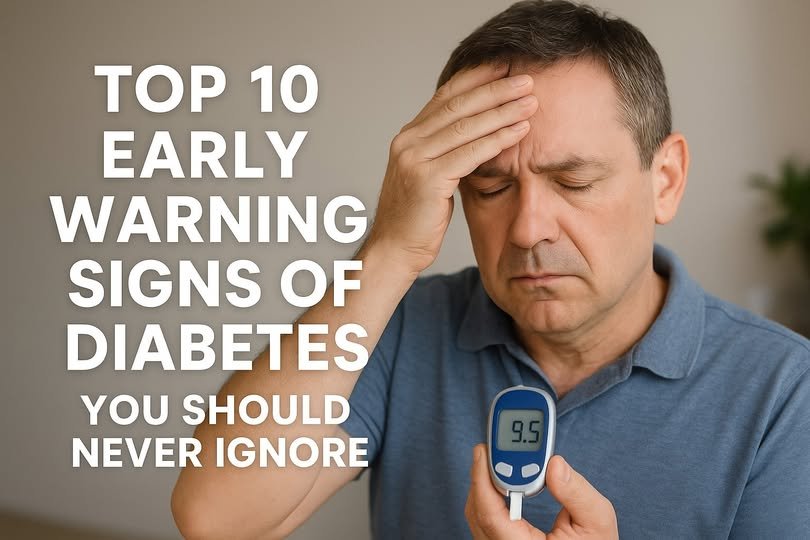
Diabetes does not always arrive loudly.
Sometimes it starts quietly.
A little more thirst than usual.
A few extra trips to the bathroom.
Feeling tired even after sleeping.
Blurry vision that comes and goes.
A small cut that takes forever to heal.
And because these signs seem ordinary, many people ignore them.
But here is the truth: diabetes can develop slowly, especially type 2 diabetes, and symptoms may be mild or easy to miss in the beginning. The CDC says diabetes symptoms can include frequent urination, increased thirst and hunger, unexplained weight loss, fatigue, blurry vision, frequent infections, slow-healing wounds, and numbness or tingling in the hands or feet.
So today, we are talking about the top 10 early warning signs of diabetes you should never ignore.
This video is for education only. It is not a diagnosis. If you recognize several of these symptoms, speak with a doctor and ask about blood sugar testing.
Sign Number 1: Frequent Urination
One of the most common early warning signs of diabetes is needing to urinate more often than usual.
This may happen during the day, but many people notice it most at night.
You may wake up once, twice, or even several times to use the bathroom.
Why does this happen?
When blood sugar gets too high, the kidneys try to remove the extra sugar from the blood. To do that, your body pulls more water into the urine. This can make you pee more often and in larger amounts.
At first, people may blame it on drinking more water, aging, coffee, stress, or cold weather.
But if frequent urination is new, persistent, or happening along with thirst or fatigue, it should not be ignored.
Sign Number 2: Feeling Extremely Thirsty
The second warning sign is increased thirst.
This is closely connected to frequent urination.
When your body loses more fluid through urine, you can become dehydrated. That dehydration makes you feel unusually thirsty.
You may notice that you keep drinking water, but your mouth still feels dry.
You may feel like no amount of water fully satisfies your thirst.
This is not just normal thirst after exercise or a hot day.
This is thirst that keeps coming back.
The CDC and NIDDK both list increased thirst and urination as common symptoms of diabetes.
Sign Number 3: Feeling Hungry Even After Eating
Another early sign is increased hunger.
This can feel confusing because you may eat a meal, but still feel hungry soon after.
Here is why it can happen.
Your body uses glucose, or blood sugar, as fuel. But in diabetes, the glucose may stay in the bloodstream instead of entering the cells properly. That means your cells may not be getting the energy they need, even though there is plenty of sugar in the blood.
So your body sends hunger signals.
You may snack more.
You may crave quick energy foods.
You may feel weak or shaky when you have not eaten.
Increased hunger, especially when combined with thirst, urination, and tiredness, can be an important warning sign.
Sign Number 4: Unexplained Weight Loss
If you are losing weight without trying, pay attention.
Unexplained weight loss can happen when the body cannot properly use glucose for energy. When cells do not get enough fuel, the body may start breaking down fat and muscle instead.
This is especially common in type 1 diabetes, but it can also happen in type 2 diabetes.
You might notice your clothes getting loose.
People may comment that you look thinner.
You may be eating the same amount, or even eating more, but still losing weight.
The American Diabetes Association includes weight loss, even while eating more, as a warning sign of diabetes, especially type 1 diabetes.
Unexplained weight loss should always be checked by a healthcare professional.
Sign Number 5: Constant Fatigue
Feeling tired is common.
But diabetes-related fatigue is different.
It can feel like your body is running on low battery all day.
You may sleep enough but still wake up exhausted.
You may struggle to focus.
Simple tasks may feel heavier than usual.
This happens because glucose is not being used efficiently for energy. High blood sugar can also affect hydration and sleep, especially if you are waking up at night to urinate.
Fatigue is one of the common diabetes symptoms listed by the CDC, NIDDK, and the American Diabetes Association.
So if your tiredness is persistent, unusual, or paired with other symptoms, do not ignore it.
Sign Number 6: Blurry Vision
Diabetes can affect the eyes.
One early warning sign is blurry vision that may come and go.
High blood sugar can cause fluid changes in the eyes, which can temporarily affect your ability to focus.
You may notice that text looks fuzzy.
You may have trouble seeing clearly while driving.
Your vision may seem better some days and worse on others.
Many people assume they just need new glasses.
But sudden or changing blurry vision can be a sign that blood sugar levels are not normal.
Blurred vision is listed by NIDDK, CDC, and the American Diabetes Association as a diabetes symptom.
Any sudden vision change should be taken seriously.
Sign Number 7: Cuts, Sores, or Wounds That Heal Slowly
Another important warning sign is slow healing.
A small cut, blister, or sore may take much longer than usual to get better.
You may notice wounds on the feet, legs, hands, or anywhere on the body healing slowly.
High blood sugar can affect circulation, inflammation, immune response, and nerve health. Over time, this can make it harder for the body to repair itself.
The CDC lists slow-healing cuts, sores, or wounds as a symptom more common in type 2 diabetes.
This is especially important for foot wounds. If a sore on the foot becomes infected or does not heal, it should be checked quickly.
Sign Number 8: Frequent Infections
Diabetes can make some infections more likely or harder to clear.
People may experience frequent urinary tract infections, yeast infections, skin infections, gum infections, or recurring infections that seem to return again and again.
High blood sugar can create an environment where some germs grow more easily. It can also affect the immune system’s ability to fight infection effectively.
The CDC lists frequent urinary tract infections or yeast infections among diabetes symptoms.
So if infections are becoming frequent, recurring, or harder to treat, it may be worth asking your doctor whether blood sugar could be part of the issue.
Sign Number 9: Numbness, Tingling, Burning, or Pain in Hands and Feet
A serious warning sign is tingling or numbness in the hands or feet.
Some people describe it as pins and needles.
Others feel burning, sharp pain, weakness, or a strange numb sensation.
This can happen when high blood sugar affects nerves over time.
The CDC says diabetic nerve damage can cause symptoms like numbness or tingling in the hands, fingers, feet, or legs, and may also lead to serious foot problems.
This symptom should never be ignored, especially if it is getting worse or affecting walking, sleep, balance, or daily activity.
Sign Number 10: Darker Skin Patches, Especially Around the Neck or Armpits
One warning sign many people do not know about is darker, thicker, or velvety skin patches.
These often appear around the neck, armpits, groin, elbows, or other skin folds.
This condition is often linked with insulin resistance, which can happen before type 2 diabetes develops.
The skin may look darker than surrounding areas.
It may feel thicker or softer.
Some people think it is dirt or poor hygiene, but it does not wash away.
This sign does not always mean diabetes, but it can be a clue that the body is struggling with insulin.
If you notice this along with weight changes, fatigue, thirst, urination, or family history of diabetes, speak with a healthcare provider.
Important Warning: Some People Have No Symptoms
Here is something very important.
Not everyone with diabetes has obvious symptoms in the beginning.
Type 2 diabetes can develop slowly over years, and symptoms may be so mild that a person does not notice them. NIDDK states that type 2 diabetes symptoms often develop slowly and may be mild enough to go unnoticed.
That is why testing matters.
A simple blood test can check your blood sugar and help identify diabetes or prediabetes early.
This is especially important if you have risk factors such as family history of diabetes, being overweight, high blood pressure, history of gestational diabetes, low physical activity, or being over age 35 to 45 depending on screening guidelines in your country.
When Should You See a Doctor?
You should consider speaking with a healthcare provider if you notice:
Frequent urination and unusual thirst.
Unexplained weight loss.
Blurry vision.
Extreme fatigue.
Slow-healing wounds.
Frequent infections.
Tingling or numbness in your hands or feet.
Or several symptoms happening together.
Seek urgent medical help if someone has vomiting, severe weakness, confusion, deep or rapid breathing, fruity-smelling breath, severe dehydration, or extreme drowsiness. These may be warning signs of a dangerous high-blood-sugar emergency, especially in type 1 diabetes or uncontrolled diabetes.
What Tests Can Detect Diabetes?
Doctors commonly use blood tests such as fasting blood glucose, A1C, or an oral glucose tolerance test.
The A1C test gives an estimate of average blood sugar over the past two to three months.
Do not rely only on symptoms.
Testing is the only way to know.
Closing Message:
Diabetes is serious, but early detection can make a huge difference.
The earlier you catch it, the better chance you have to protect your eyes, kidneys, nerves, heart, feet, and overall health.
So remember these 10 warning signs:
Frequent urination.
Extreme thirst.
Increased hunger.
Unexplained weight loss.
Constant fatigue.
Blurry vision.
Slow-healing wounds.
Frequent infections.
Numbness or tingling.
Dark skin patches.
One symptom alone may not mean diabetes.
But several symptoms together should never be ignored.
Your body often whispers before it screams.
Listen early.
Get tested.
And protect your health before a small warning becomes a serious problem.